A few weeks ago the local twitterverse exploded with contentious debate on the topic of boosterism. The catalyst was this article about boosterism in Cleveland, although you could replace Cleveland with St. Louis and the article would still read almost perfectly. This created a lot of chatter on several fronts. We had a contingent that lead the charge that many well to do city supporters tend to ignore the plight of the underclass in favor of highlighting progress that is more superficial in nature (IE: a new coffeeshop or restaurant). For a second, I felt a tinge of guilt. But then there were many pro-boosterism tweets pointing out that highlighting your city's strengths doesn't have to come at the expense of ignoring the poor.
I spent a lot of time deliberating on this. Like the author of the Cleveland article, my version of my city is pretty great. I eat at great restaurants, I own a home, I enjoy great parks, and there is just always something fun going on in the city. And like the author, sometimes I feel some city boosterism goes a little overboard to the point where it can get annoying. But I do not see an honest argument being made in favor that the most ardent city supporters deny St. Louis' problems. And I do not at all see how boosterism and acknowledgement of major problems are mutually exclusive.
Anyone who has spent a significant amount of time here can see that negativity is the prevalent feeling in the St. Louis area regarding its future. How else could you feel about how a city that once hosted the Olympics and now is barely holding on to its title of largest metro area in Missouri (see, even I can't succumb to not being negative!). So what is so wrong with enthusiastic people who love promoting the city? Even if they completely ignore the fact that the city has serious problems, you only have to throw a rock to hit someone who will be quick to remind you. If anything, we need more delusional happy booster people.
Except that these same boosters we are attacking are the very people who actually are doing positive things for the city. They are choosing to spend their money in the city, live in the city, volunteer in the city, work in the city, and be a part of the larger city community. And sometimes they can even convince someone else to do the same. The problems of crime, failing schools, and drug abuse are not going to be "solved" overnight, if ever. But city boosters are a helluva lot closer to making the city a better place than the negative defeatists who have held our city back for far too long.
Friday, February 11, 2011

Wednesday, January 26, 2011
Practical cycling in 2011
 |
| My main steed |
A bike is at its core simply a transportation device. Yet most cyclists in the United States don't use them for anything more than recreation. I am guilty of this myself. When I first really got into cycling a couple of years ago, I spend hundreds on what I read online were absolute necessities to riding. Clipless pedals, jerseys, lycra shorts, special shoes, special gloves. It was only a month after buying a hybrid that I had to go out and get a fast bike with drop bars. I knew I probably was going overboard but I had a new hobby that I loved and it brought a lot of real tangible benefits to my life.
Yet I never really got the hang of using my bike as a transportation tool. Sure I commuted to work a dozen or so times. I'd hop on my bike to go pickup chinese food and or a coffee. I'd ride to check out neighborhoods I'd otherwise be driving around in. But the vast majority of my transportation still involved the car and it still does.
Well I'm hoping that 2011 (when it gets at least a little warmer) will be a little different. I don't have any lofty goals but I hope to bike commute more and use my bike more for practical reasons. It's not always the easiest choice, but it's definitely the healthiest, smartest, and most fun choice. In the St. Louis area, I can bring my bike on any metrobus and metrolink train so there's really no reason I shouldn't make most of my alone trips by bike other than laziness. I also love cycling and it's one of my absolute favorite things to do so why wouldn't I do it more? The change of clothes and dealing with the occasional annoyed driver are worth the vast benefits cycling gives me. I hope to reap a lot more of those benefits this year.
Sunday, January 9, 2011
Blind optimism vs. unrelenting negativity
I started a blog because thoughts of urbanity swirl through my head almost constantly. I needed a depository for these thoughts so I can see how they (and I) have evolved over time. The problem with blogging versus writing this stuff down in a personal journal is that my thoughts are public, for all to see. Of course that's the whole point of blogging, to let others read what you have to say.
The big issue is that when you have an audience, you tend to create a message tailored to your audience. My blog is still fairly new and I don't think I have any audience really at this point. But when I write, I am already thinking about what people who come across this will think, as if one part of my brain is rebutting the other.
This leads to how I want to find the "voice" for my blog, and what I want my ultimate message or "theme" to be. I want to promote St. Louis as a growing, thriving, and wonderful metropolis. I want to show people how great St. Louis really is and how despite its problems, it is on a major upswing. I want to lay a verbal smackdown to the "negative Nancy's" who are too ignorant to appreciate what we have here.
Yet I also want to be thoughtful, pragmatic, and realistic lest I lose credibility and come off as someone who has their head in the clouds. Needless to say, I've found this middle way somewhat difficult to articulate. This balance became obvious to me when I wrote a post on why St. Louis isn't the most dangerous city followed by one where I felt it was worth mentioning that crime is way too high and, at times, out of control. Another urban related thing I've gotten into recently is urban photography. It is striking how clear a photographers intent comes through the pictures he/she takes. I've seen collections that make St. Louis look like midtown Manhattan and others that make St. Louis look like Detroit. But it's rare that you will see vibrant pictures with beautiful architecture on a sunny day next to an abandoned warehouse on a winter evening.
I want to show both, but in a positive context. The most important thing St. Louis could do is bring in more people. Not just from the suburbs but from all parts of the USA, and all corners of the world too. There are millions of people out there who love old urban cities, beautiful brick buildings, and are full of big ideas. I don't think St. Louis is on their radar for one reason or another. All of the St. Louis-related blogs and websites will hopefully show them what we have and convince them to at least come here and check us out. My fear is that the massive amounts of negativity on some sites will deter some people from making that leap. Those of us who want to see St. Louis thrive need to cancel out much of that negativity and highlight the myriad of good things happening. If we do so in a way where we can accept our faults while highlighting our strengths, then we will have hit the sweet spot.
That's what I will continue to try to do.
-Joseph
The big issue is that when you have an audience, you tend to create a message tailored to your audience. My blog is still fairly new and I don't think I have any audience really at this point. But when I write, I am already thinking about what people who come across this will think, as if one part of my brain is rebutting the other.
This leads to how I want to find the "voice" for my blog, and what I want my ultimate message or "theme" to be. I want to promote St. Louis as a growing, thriving, and wonderful metropolis. I want to show people how great St. Louis really is and how despite its problems, it is on a major upswing. I want to lay a verbal smackdown to the "negative Nancy's" who are too ignorant to appreciate what we have here.
Yet I also want to be thoughtful, pragmatic, and realistic lest I lose credibility and come off as someone who has their head in the clouds. Needless to say, I've found this middle way somewhat difficult to articulate. This balance became obvious to me when I wrote a post on why St. Louis isn't the most dangerous city followed by one where I felt it was worth mentioning that crime is way too high and, at times, out of control. Another urban related thing I've gotten into recently is urban photography. It is striking how clear a photographers intent comes through the pictures he/she takes. I've seen collections that make St. Louis look like midtown Manhattan and others that make St. Louis look like Detroit. But it's rare that you will see vibrant pictures with beautiful architecture on a sunny day next to an abandoned warehouse on a winter evening.
I want to show both, but in a positive context. The most important thing St. Louis could do is bring in more people. Not just from the suburbs but from all parts of the USA, and all corners of the world too. There are millions of people out there who love old urban cities, beautiful brick buildings, and are full of big ideas. I don't think St. Louis is on their radar for one reason or another. All of the St. Louis-related blogs and websites will hopefully show them what we have and convince them to at least come here and check us out. My fear is that the massive amounts of negativity on some sites will deter some people from making that leap. Those of us who want to see St. Louis thrive need to cancel out much of that negativity and highlight the myriad of good things happening. If we do so in a way where we can accept our faults while highlighting our strengths, then we will have hit the sweet spot.
That's what I will continue to try to do.
-Joseph
Wednesday, December 15, 2010
Critical articles long on criticism, light on solutions
KMOX has an interesting 4 part piece entitled St. Louis Outside the Box. It is a shorter and more concise version of STLToday's Can St. Louis Compete? series. I'm happy to see the local media offering up solutions to area problems and offering a more detailed analysis than we typically expect from them. But I wish they would skip the typical history lesson and focus on what we can do to be better.
Here's my abridged version of how these articles describe St. Louis' history:
1) St. Louis rises to become one of Americas premier cities and is one of the grandest for much of its history
2) Urban decline creeps in starting in the 1950's and goes full force through the 60's, 70's and 80's
3) Along the way corporate icons disappeared, manufacturing left, and population sprawled out
4) Pathetic attempts at urban revitalization include shopping malls, housing projects, new stadiums, and other grandiose projects aimed at window dressing serious deep seated problems just make things worse
5) Before you turn off your computer, book a U-Haul, pack your stuff and move to Chicago, you are reminded that actually, things in St. Louis are at least stable and looking up in many ways
I think St. Louis has a fascinating history and is many ways a lesson of "How NOT to run a city" from 1930 to 2000. The tone of these articles often feel to me like the writer just wants to point fingers and show off how stupid regional leadership has been (and still is in many ways). Unfortunately the people who really screwed things up around here have mostly died, and in some ways didn't know any better.
Here's my abridged version of how these articles describe St. Louis' current state:
1) Too many municipalities take from each other resulting in zero net gain for the region
2) Too many big projects focus on making a splash and a headline rather than bringing in jobs (see #4 above)
3) Sprawl has ensured racial and economic lines change position but still remain in place
4) Area growth is stagnant
5) Grassroots urban revitalization has turned some parts of the city around
I share in these critical views but wish #5 would receive more coverage than it does. Here is where these types of articles typically end. They will offer up some solutions such as St. Louis developing its economic niche in something like Biotech. Or merging municipalities together so we stop competing with ourselves. Or introducing TIF reform. Or how St. Louis just really needs to market itself better.
This is all well and good but it took us this long to get to what we should have been discussing all along! Solutions. They aren't all feasible and they won't all work, but getting a dialogue going about really turning things around is what the local media should be doing. Some of them do it better than others. I would love for each of these features to be a weekly thing so that these topics are constantly on the table and being discussed. And I don't mean just in the blogs like Building Blocks.
To be fair, the independent media in St. Louis does a good job at this already. UrbanSTL has an active forum where empassioned St. Louisans discuss important issues relating to development and the future of St. Louis. The blog UrbanReviewSTL does a good job of this as well. More focus on area redevelopment and moving St. Louis forward can only be good for the area. If people cared about bringing more jobs, people, and advancing the local economy as they did about the Cardinals, then I'm sure many of the proposed solutions would happen sooner rather than later. Or at least it would be a start.
Here's my abridged version of how these articles describe St. Louis' history:
1) St. Louis rises to become one of Americas premier cities and is one of the grandest for much of its history
2) Urban decline creeps in starting in the 1950's and goes full force through the 60's, 70's and 80's
3) Along the way corporate icons disappeared, manufacturing left, and population sprawled out
4) Pathetic attempts at urban revitalization include shopping malls, housing projects, new stadiums, and other grandiose projects aimed at window dressing serious deep seated problems just make things worse
5) Before you turn off your computer, book a U-Haul, pack your stuff and move to Chicago, you are reminded that actually, things in St. Louis are at least stable and looking up in many ways
I think St. Louis has a fascinating history and is many ways a lesson of "How NOT to run a city" from 1930 to 2000. The tone of these articles often feel to me like the writer just wants to point fingers and show off how stupid regional leadership has been (and still is in many ways). Unfortunately the people who really screwed things up around here have mostly died, and in some ways didn't know any better.
Here's my abridged version of how these articles describe St. Louis' current state:
1) Too many municipalities take from each other resulting in zero net gain for the region
2) Too many big projects focus on making a splash and a headline rather than bringing in jobs (see #4 above)
3) Sprawl has ensured racial and economic lines change position but still remain in place
4) Area growth is stagnant
5) Grassroots urban revitalization has turned some parts of the city around
I share in these critical views but wish #5 would receive more coverage than it does. Here is where these types of articles typically end. They will offer up some solutions such as St. Louis developing its economic niche in something like Biotech. Or merging municipalities together so we stop competing with ourselves. Or introducing TIF reform. Or how St. Louis just really needs to market itself better.
This is all well and good but it took us this long to get to what we should have been discussing all along! Solutions. They aren't all feasible and they won't all work, but getting a dialogue going about really turning things around is what the local media should be doing. Some of them do it better than others. I would love for each of these features to be a weekly thing so that these topics are constantly on the table and being discussed. And I don't mean just in the blogs like Building Blocks.
To be fair, the independent media in St. Louis does a good job at this already. UrbanSTL has an active forum where empassioned St. Louisans discuss important issues relating to development and the future of St. Louis. The blog UrbanReviewSTL does a good job of this as well. More focus on area redevelopment and moving St. Louis forward can only be good for the area. If people cared about bringing more jobs, people, and advancing the local economy as they did about the Cardinals, then I'm sure many of the proposed solutions would happen sooner rather than later. Or at least it would be a start.
Tuesday, December 14, 2010
Best things to happen to St. Louis in 2010
2010 is winding down so it's time for some obligatory end of year review lists. I think 2010 was an average to good year for St. Louis. Aside from regaining our most dangerous title, I can't think of any reason why things in St. Louis aren't any better in 2010 then they were in 2009.
Here's why:
1) Passage of Prop A. Metro took a huge step forward in gaining passage of Prop A this past April. I will be the first to admit I was extremely pessimistic that this would pass. And not only did it pass, but it had a huge margin of victory. St. Louis obviously has a very strong and vocal mass transit and progressive community to pull off this victory. The future for Metro has never been brighter.
2) St. Louis named a top 100 place to live This includes cities of all sizes and even has one St. Louis suburb (O'Fallon). But the fact that Relocate America recognizes St. Louis CITY as a livable and desirable place to relocate to just reinforces what a lot of us already know. If only this list got as much coverage as CQ press!
3) St. Louis city growing, Census says. This actually just came out today, but I had to include it. The 2005-2009 survey estimates are in, and the city is growing while the county is shrinking. While 2.8% doesn't quite make us a boom town, it is a hugely positive trend. I can't wait to see the 2010 numbers.
4) St. Louis bidding for 2012 Democratic Convention. Yes it may turn out that another city gets picked. But I love our chances and I like that the city and CVC are ambitious enough to fight for this. I was at the Chuck Berry/Nelly concert at Keiner plaza this summer and I loved the enthusiasm and energy the crowd had to bring this here.
5) The Roberts Tower get finished. It's been forever and a day since downtown had new residential construction. Now we have a beautiful, sleek new residential tower that shows just how far downtown has come. I wish I could afford to live there!
I want to add more but I only wanted to mention real significant stuff. As far as bad stuff that happened, there is that nasty list I mentioned earlier and quite a few nice restaurants closed this year. Other than that, I think 2010 was a solid year for St. Louis where we held our own despite the recession.
Friday, December 3, 2010
Should I stay or should I go now?
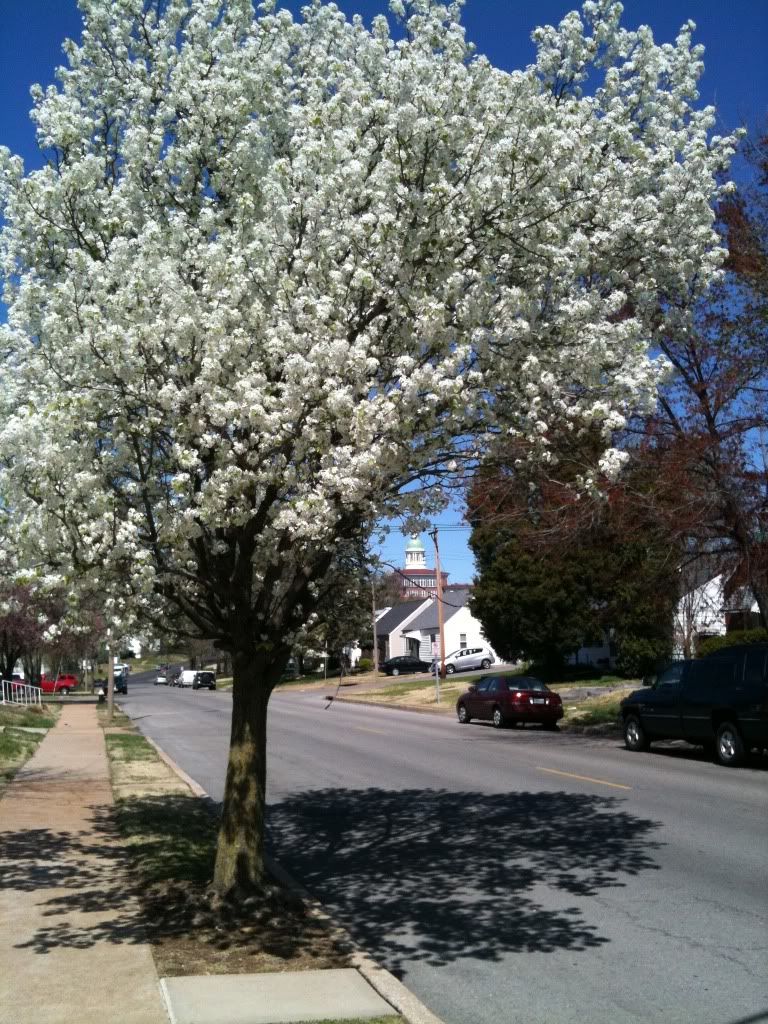
The truth is I'm not going anywhere anytime soon. My girlfriend and I bought our house in May 2009 and thanks to the $8000 first time home buyers tax credit, we have to remain here for at least 3 years. And that's totally fine since I love this neighborhood. North Hampton is one of the great neighborhoods of St. Louis city. It combines a near perfect location with a great park, retail within walking distance, it is very safe, and everyone is very friendly. Oh and the neighborhood is chock full of a remarkable housing stock, home values remain stable, and we really love our house.
So why the hell would I be thinking about moving? Well, I have been introduced to urban living and I am hooked. North Hampton is really great but it isn't nearly as urban as its neighbors to the north and to the east. The neighborhood may be safe, but there isn't the real cohesive community feel that other neighborhoods have. In fact, the neighborhood isn't cohesive at all. There are actually two neighborhoods within North Hampton, the Tilles Park neighborhood, and Kingshighway Hills, which doesn't even have a website!
Honestly though, I don't have any real complaints about North Hampton....I can see myself living here for many many years. It is more that I am intrigued my other city neighborhoods. I walk/bike/drive through and I get excited just thinking about living there. The feeling is strongest when I am in Tower Grove South, Shaw, the Grove, Benton Park, CWE, and Lafayette Square. The housing stock in this neighborhoods are some of the best in the region, they have strong neighborhood associations, they have amazing historic parks, a lot of inter-neighborhood businesses and a strong identity/sense of place. I also get the feeling similar neighborhoods have a very bright future ahead of them too such as McKinley Heights, Fox Park, Benton Park West, and Tower Grove East. I would buy in any of the above and not really give it a second thought assuming I liked the property and street.
Except...this is the real world and a lot of things have to go into consideration before making such a huge decision. I am happy now, would I really gain a lot by moving? Shouldn't we live in our house longer than 3 years so it appreciates more? What if we have to move to another city for career advancement? What if we really want to start a family...shouldn't we stay in southwest city where it is safest and most family-friendly? Will our friends and relatives hesitant to visit us if we are in a more transitional area? Are we really prepared to deal with the complications of living in a more urban place?
I ponder these questions and more all the time. The truth is that the only thing I'm certain about is that my future will be in the city (or a city if not the city of St. Louis) and not in the far flung suburbs.
Ok so maybe things are a bit dangerous around here...
The last week (and last month actually) has been probably the worst week crime wise since I've moved back to the city. I've just about lost track but it would appear that roughly a dozen people have been shot and of those, 7 or 8 have been killed. One particularly disturbing story is of a man who was robbed, beaten, and shot at 6pm on busy Gravois road near the intersection with Arsenal. Still, most of the recent up tick in violence is gang related, happens overnight, and occurs mainly in a few particularly dangerous neighborhoods on the northside. That doesn't make it acceptable, but it helps alleviate my nerves when crazy stuff is happening.
Naturally this leads to the constant questioning of what to do when crime is seemingly out of control? The truth is there are no easy answers. Over on UrbanSTL, I advocated for a more open city police department that laid out exactly what was happening and what the SLMPD were doing to combat it. Others didn't think highly of that idea based on the fact that it would be publicizing valuable gang intel and may scare people who may already be jittery about going into the city.
Fair enough. But something has to be done. I won't be so naive as to call on the mayor and police chief to "fix" this problem as if it were that simple. It does appear that Police chief Isom has taken some action in response , I don't know if it will be enough but one thing I have noticed from studying St. Louis crime rates, is that it is definitely cyclical. There have been long stretches this year with relatively few homicides or other high profile incidents. And I would be remiss if I didn't mention that the large majority of St. Louis neighborhoods have not seen any increase in crime and overall crime is down this year from 2009. I hope things stay that way and that we've seen the worst crime month we will see for a very long time.
Subscribe to:
Posts (Atom)